 +385 52 501 333
 info@maris.hr


Solar panels with battery storage for your house or villa: what to know before installation
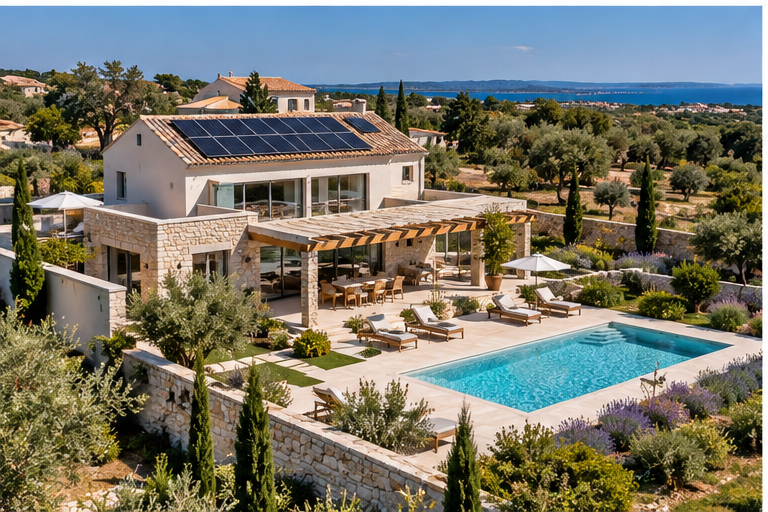
A house, villa or apartment already connected to the grid can generate its own electricity. Solar panels cover daytime consumption, a battery stores surplus energy for the evening and periods of higher demand, and the grid remains available as a backup. In Pula and the surrounding area, one of Croatia’s sunniest regions, this kind of system makes the most sense for properties where electricity use peaks in summer: holiday homes, villas with pools and holiday rentals.
How the system works
Rooftop solar panels supply the property with electricity during the day. Any energy not used at that moment goes into battery storage, ready for the evening, when the air conditioning, kitchen appliances and lighting are all in full use. An inverter manages the flow of electricity between the panels, battery, house and grid. With the right equipment, the system can also provide backup power for selected appliances during a power cut, a real advantage in the more rural parts of the municipalities around Pula.
What you gain:
- less electricity purchased from the grid
- more of your own solar energy used on site, instead of exporting the surplus to the grid at a lower price
- smart energy management and the option of backup power
Why it makes particular sense in Pula and the surrounding area
Solar generation and electricity use in a holiday home follow almost perfectly matching patterns. Sunshine peaks in July and August, when the air conditioning and pool pump are running and the house is full of guests. For a holiday rental, that means a free source of energy helps cover the season’s biggest expense.
Buyers are another reason. International buyers from the EU increasingly ask about energy costs and energy ratings when discussing a house, because they are used to doing so in their own markets. A house that can answer those questions with actual bills is better placed to stand up to a serious buyer’s scrutiny.
What to check before installation
A solar installation is not an off-the-shelf product. Before deciding, you need to check several things that determine whether the system will work as it should:
-
The roof. Its orientation, pitch and condition. There is little point in installing panels today on a roof that will need renovation in five years.
-
Grid connection capacity. One question we hear when older houses and apartments are being purchased is whether an insufficient electricity supply capacity has been addressed. Solar does not resolve an undersized grid connection; that needs to be dealt with through HEP. A battery can, however, help reduce peak demand.
-
Consumption. Your consumption pattern throughout the year, rather than just the total on your bills. A house used in summer and one lived in all year round need different solutions.
-
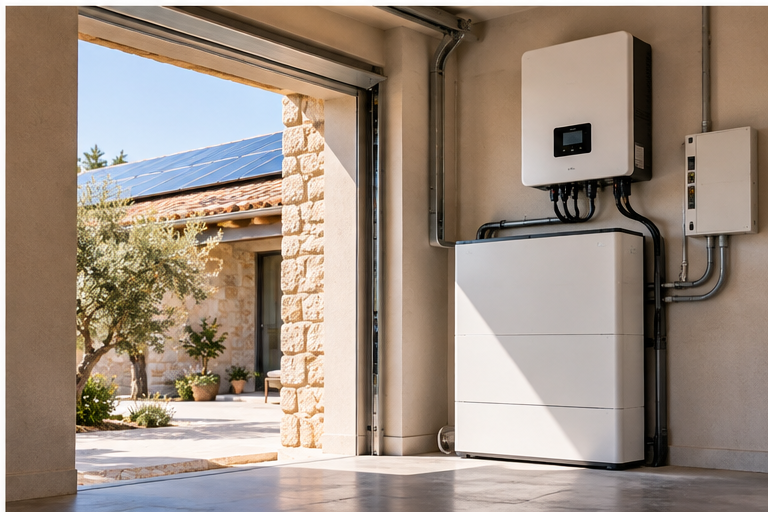
Space for the battery. The battery and inverter need a dry, ventilated space: a garage, utility room or sheltered recess beside the house.
-
Co-owners. In apartment buildings, installation on a shared roof requires the co-owners’ consent and a coordinated solution, making the process more complex than for a single-family house.
Permits and formalities
Installing solar panels on the roof of an existing house generally does not require planning permission, but it does require an electrical installation design and notification to HEP ODS, as the household becomes a customer generating its own electricity. Any surplus that you neither use nor store in the battery is exported to the grid and settled under the rules applicable to these customers. The Environmental Protection and Energy Efficiency Fund periodically opens funding calls, so it is worth checking whether one is available before installation.
What solar means when you sell your property
It is important to be honest here. The money invested in a solar installation is not reflected pound for pound in the sale price. Buyers appreciate it, but they do not pay its full cost. So you install solar because you will use it, rather than simply to sell the house for more. What solar can actually bring to a sale is a better rating on the energy performance certificate, lower bills you can show buyers and one fewer reason for them to negotiate the price down.
If you are looking for a house in Pula or the surrounding area where a system like this would make sense, explore the houses and villas in our listings.
A free initial assessment for your property
Maris works with Vovčak, a company that designs and installs solar systems with battery storage for family homes, apartments, villas and tourist accommodation. Based on your consumption profile and the characteristics of the location, you receive a proposed technical solution and an initial estimate of the financial return.
Request a free initial assessment
Savings and financial returns depend on consumption, energy prices, equipment and local conditions.
Questions and answers
Do I need planning permission for solar panels on my roof?
Generally not for an existing house, but you do need an electrical installation design and notification to HEP ODS as a customer generating your own electricity. The installer usually handles this part of the process too.
What if the house does not have enough grid connection capacity?
Solar does not resolve this. You need to apply to HEP ODS for an increase in connection capacity and pay a fee based on the additional kilowatts. A battery can help with short periods of peak demand, but it does not replace a higher-capacity connection.
Can solar be installed for an apartment?
Yes, but it is rarely straightforward. The roof is a shared part of the building, so the co-owners’ consent is required. When buying a new-build apartment, it is worth checking whether the developer has included solar or at least made provision for it.
Does a solar system with a battery work during a power cut?
A standard grid-connected system shuts down during a power cut for safety reasons. If the system is equipped for backup power, selected appliances can continue running on the battery. This needs to be agreed at the design stage, rather than afterwards.
Does a solar installation increase a house’s value when selling?
It makes the house more attractive and helps buyers make their decision, but the investment is not recovered in full through the sale price. It has the greatest impact on holiday homes and rental properties, where buyers can immediately see the seasonal savings.
Is solar worthwhile for a house used only in summer?
These are often precisely the houses where it makes sense, because peak generation coincides with peak consumption. If the house is also rented out, the seasonal savings are an additional benefit.
Aljoša Vučetić, prof., licensed real estate agent (licence no. 43/2010), owner of MARIS nekretnine in Pula and President of the Professional Group of Real Estate Brokers of Istria County at the Croatian Chamber of Economy. He has worked in Pula’s property market for more than 25 years.
