 +385 52 501 333
 info@maris.hr


Pula Landmarks: 9 Must-See Things to See in Pula, Istria
Pula might look like a quiet coastal town, but it welcomed almost 260,000 tourists and over 1,085,000 overnight stays in just seven months of 2025, which says a lot about how attractive its landmarks really are. In this guide we walk you through the most important Pula attractions, from Roman times to Austro-Hungarian villas, Italian architecture, Brijuni National Park and how all of this shapes life and real estate in and around the city today.
Key Takeaways
| Question | Answer |
|---|---|
| Why is Pula unique in Istria? |
Pula combines a 3,000-year Roman heritage, an Austro-Hungarian naval base, Italian-era architecture, Yugoslav modernism, and a protected coastline with Brijuni National Park. This mix strongly shapes the city’s lifestyle and its real estate market. |
| What are the top Pula landmarks for first-time visitors? |
The Pula Arena, Forum and Temple of Augustus, Kaštel Fortress, Arch of the Sergii, the Austro-Hungarian Market (an indoor fish and meat market and an open-air green market) and Brijuni National Park are essential stops near many residential areas in the wider Pula region. |
| How did the Austro-Hungarian era shape Pula? |
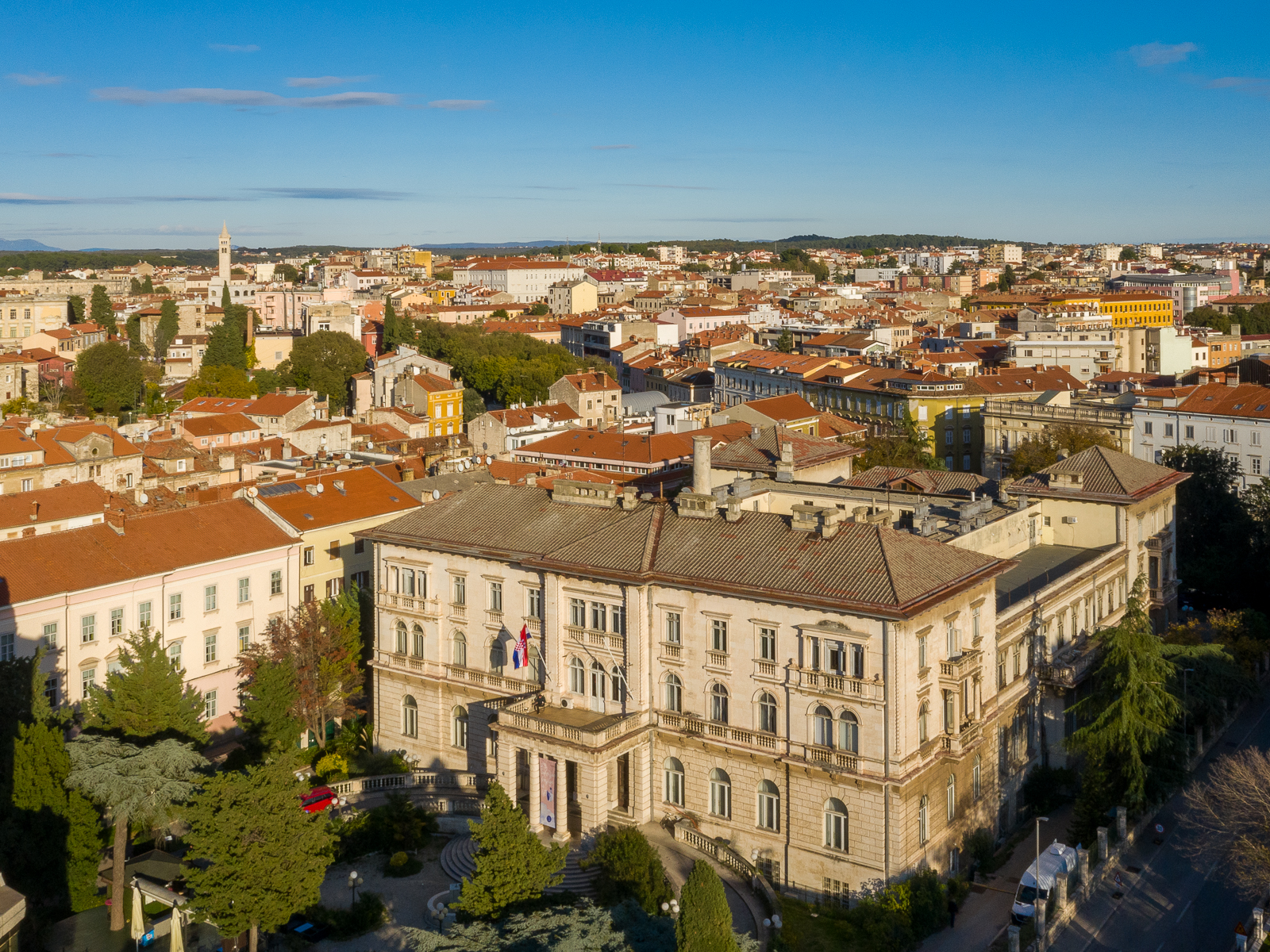
It turned Pula into the main war port of the empire and brought grand Austro-Hungarian villas, officer residences, naval facilities, and representative public buildings. One of the most famous is today’s Dom Hrvatskih Branitelja, originally built as the Imperial and Royal Naval Casino with an elegant ballroom, social halls and cultural spaces for officers and city elites, reflecting Pula’s importance within the empire. |
| Where can I see Austro-Hungarian and Italian architecture today? |
Along the waterfront, in the city center, around former military zones, and on several of Pula’s seven hills, you will find Austro-Hungarian villas, Italian administrative buildings, and elegant apartment houses. |
| Are there historic stone houses in and around Pula? |
Yes, traditional stone houses appear in older quarters and nearby villages, often renovated into charming homes, holiday villas, or boutique rentals that combine history with modern comfort. |
| Why does proximity to the sea matter when exploring Pula landmarks? |
Most key sights are close to the Adriatic, and life in Pula is naturally connected to beaches, marinas, and coastal promenades, which is why properties near the sea are highly valued. |
| Is Brijuni really worth a day trip from Pula? |
Absolutely. Brijuni National Park is one of Croatia’s most exclusive natural and historical complexes, only a short boat ride away, and a major reason visitors fall in love with this part of Istria. |
1. Why Pula in Istria Is So Special: A City Layered With History
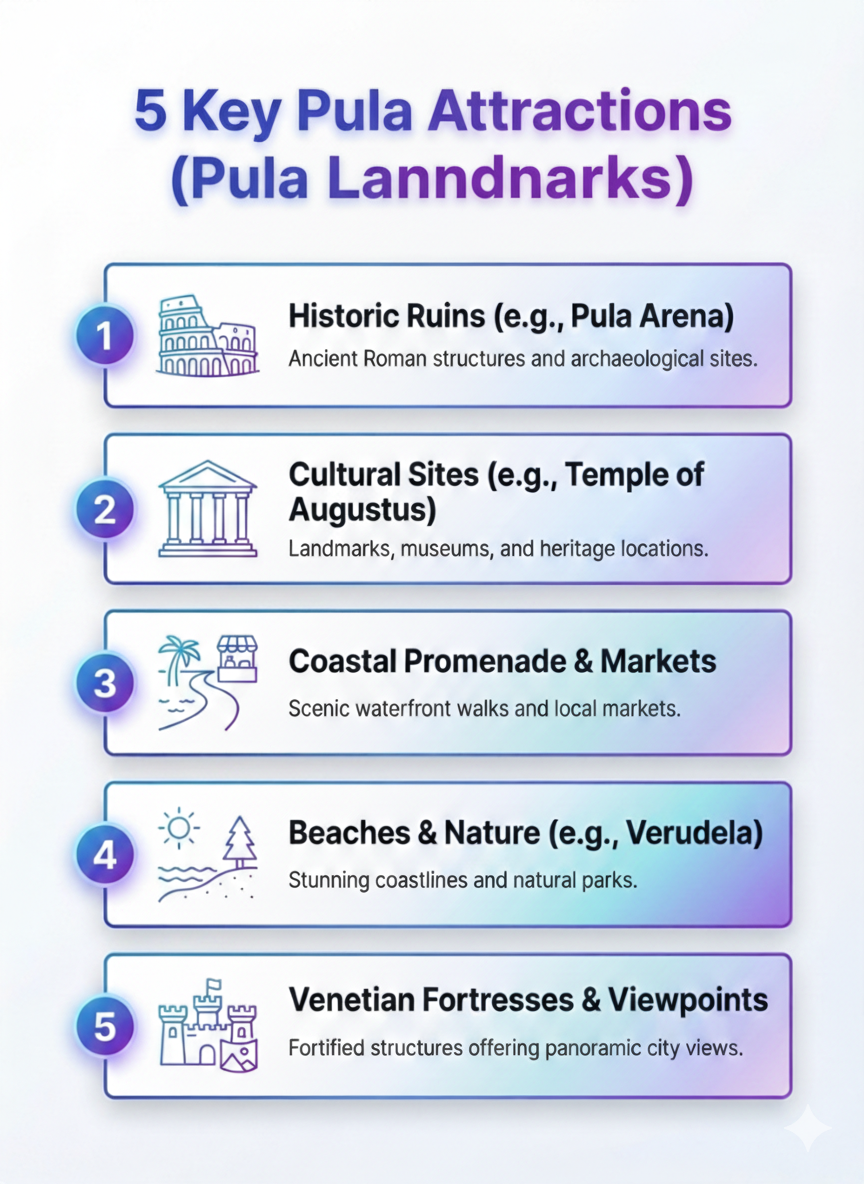
Pula is not a resort built overnight; it is a city that grew for more than 3,000 years on seven hills, around a natural harbor and only a short sail from Brijuni. Romans, Venetians, Austro-Hungarians and Italians all left visible marks, so every walk through Pula is essentially a walk through European history at full scale. One of Pula’s unique visual features is how green it appears when approached from the sea, with numerous parks, tree-lined areas and only a few visible high-rise buildings breaking the skyline.
What makes Pula stand out in Istria:
-
A perfectly preserved Roman amphitheater used today for concerts and films
-
A compact old town with temples, city gates and Venetian palaces
-
Powerful Austro-Hungarian fortifications and villas that once housed admirals and officers
-
Italian-era urban buildings and squares with a Mediterranean feel
-
Access to islands and beaches, especially Brijuni National Park
For anyone interested in real estate, this layered past also means very different property types within just a few kilometers. You will find traditional stone houses in nearby villages, Austro-Hungarian townhouses in central streets, and new apartments with sea views on the slopes that surround the bay.
2. Roman Pula: Arena, Forum and Timeless Landmarks
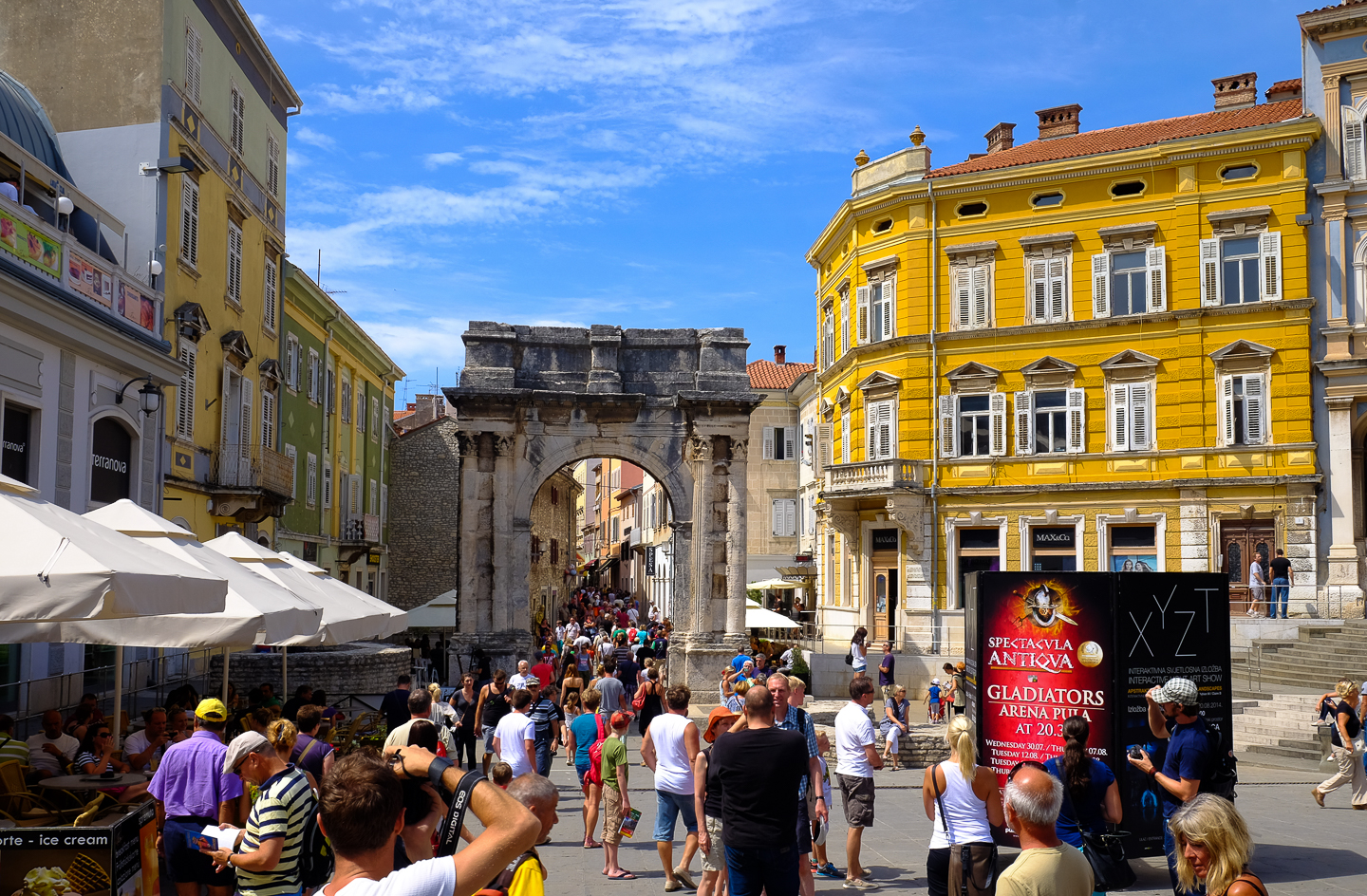
If you start with Pula landmarks, you naturally start with the Romans. They created the street grid of the old town and left the Arena, the Forum, the Temple of Augustus, the Arch of the Sergii and much more that still define the city.
Pula Amphitheatre (Arena)
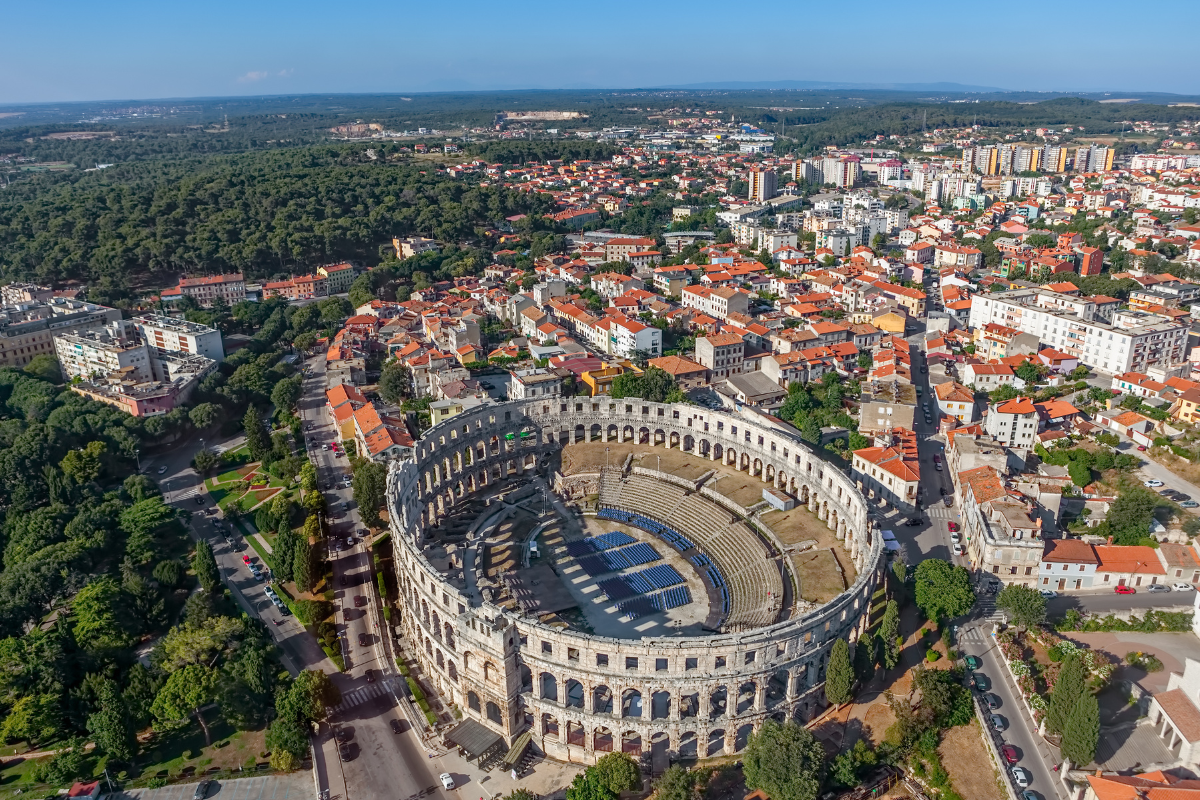
The Pula Amphitheatre, known locally simply as the "Arena", is one of the best-preserved Roman amphitheaters in the world and the symbol of Pula. It hosted gladiator fights in the 1st century and now hosts concerts, film festivals and events that fill hotels, apartments, and private rooms around the center.
Forum and Temple of Augustus
The Forum has been the heart of the city since Roman times and still works as the main square today. On one side you see the elegant Temple of Augustus, on the other the City Hall that reused Roman elements – a good example of how history is literally built into everyday life.
Roman Gates and Streets
The Arch of the Sergii, the Twin Gate (Porta Gemina), Hercules Gate (Porta Herculea) and the remains of the city walls show how Pula grew as an important Roman colony. Locals often refer to the Twin Gate area as the "lungs of the city" (Giardini), as the historic entrance opens toward one of Pula’s main green urban zones. The city walls still partially surround the historic center, clearly defining its ancient core. Walk a few minutes away and you already reach residential buildings and stone houses that grew around these Roman axes.
3. The Seven Hills of Pula and How They Shape the City
Pula was built on seven hills. They influence how districts developed, which streets have sea views, where fortresses were built and where today you find some of the most interesting residential locations.
Living on a hill in Pula usually means more light, better air flow and often at least a partial sea view, while still having quick access to the harbor, the Arena or the Forum.
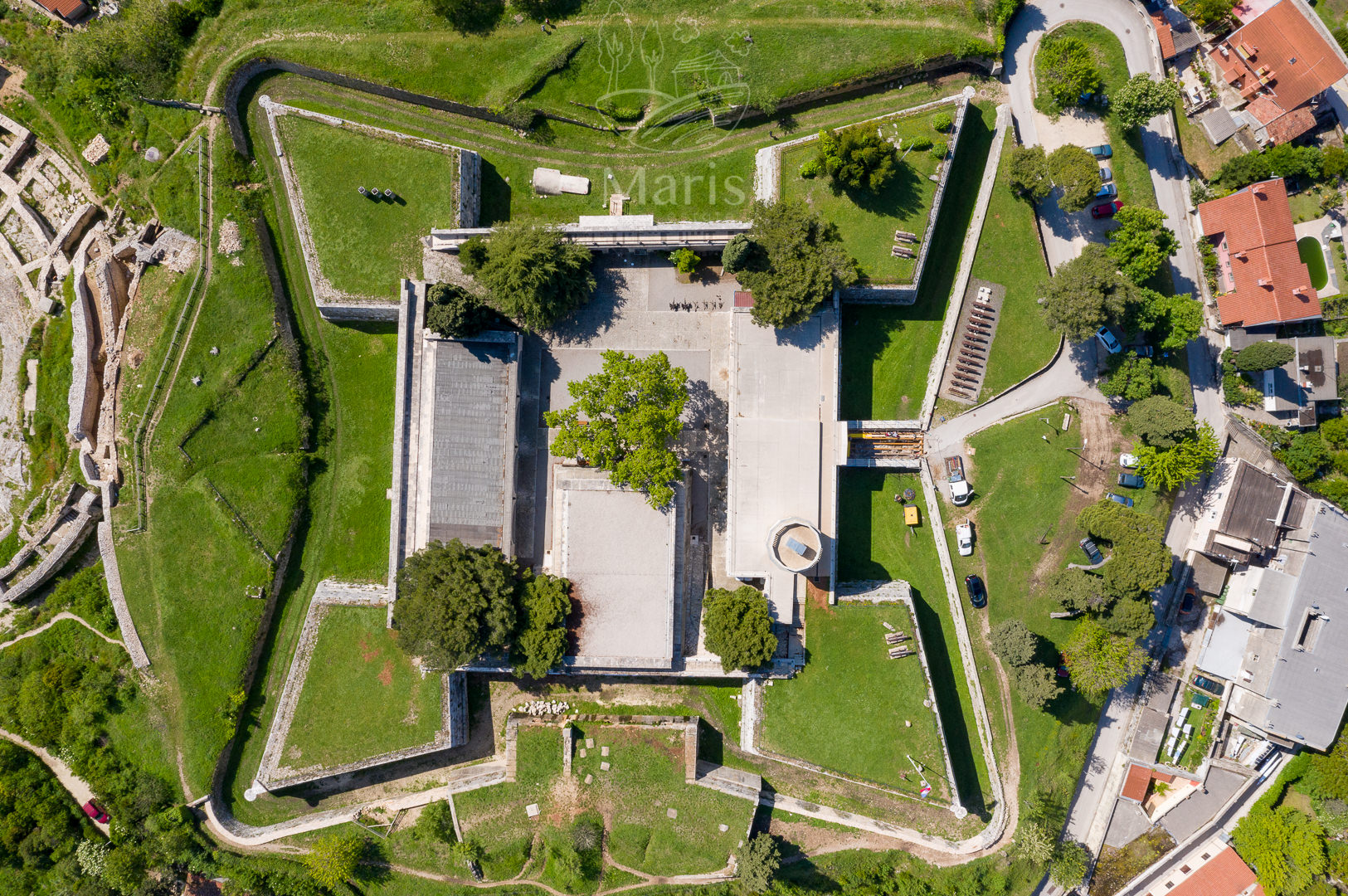
The Austro-Hungarian Empire used the hills strategically when they fortified Pula as their main naval base. That is why you find a ring of forts and batteries on elevated positions, many of which today are green areas, viewpoints or cultural spaces.
4. Austro-Hungarian Pula: Naval Base, Forts, Villas and Urban Life
The Austro-Hungarian period turned Pula into the main war port of the empire and changed its look forever. In this era the city gained shipyards, batteries, forts and a system of grand villas for officers and high officials that are still among the most elegant buildings in town.
This period also shaped everyday urban life. The central market building, numerous public parks and green spaces, and key infrastructure such as administrative buildings laid the foundations of modern Pula.
These villas usually have high ceilings, large windows, decorative façades and generous gardens or courtyards. They appear in key quarters close to the sea and important roads, which is why they are still very attractive for residential use.
Around Pula you can explore a ring of forts such as Verudela, Bourguignon and Monte Ghiro, which tell the story of the city as a heavily fortified port.
5. Italian Pula: Architecture Between Two Wars
After the fall of Austro-Hungary, Pula again became part of Italy. This period brought new administrative buildings, schools, residential blocks and public spaces, often with rationalist or neoclassical lines typical for the time.
Many central buildings from this era still house institutions, schools or offices. Residential buildings from the Italian period often sit in prime locations with wide streets and easy access to the sea, which makes them attractive for long-term living.
Italian language and culture are still present in daily life, especially in markets and cafés, adding to the Mediterranean character of the city.
6. Brijuni National Park: Pula’s Green and Historic Neighbor
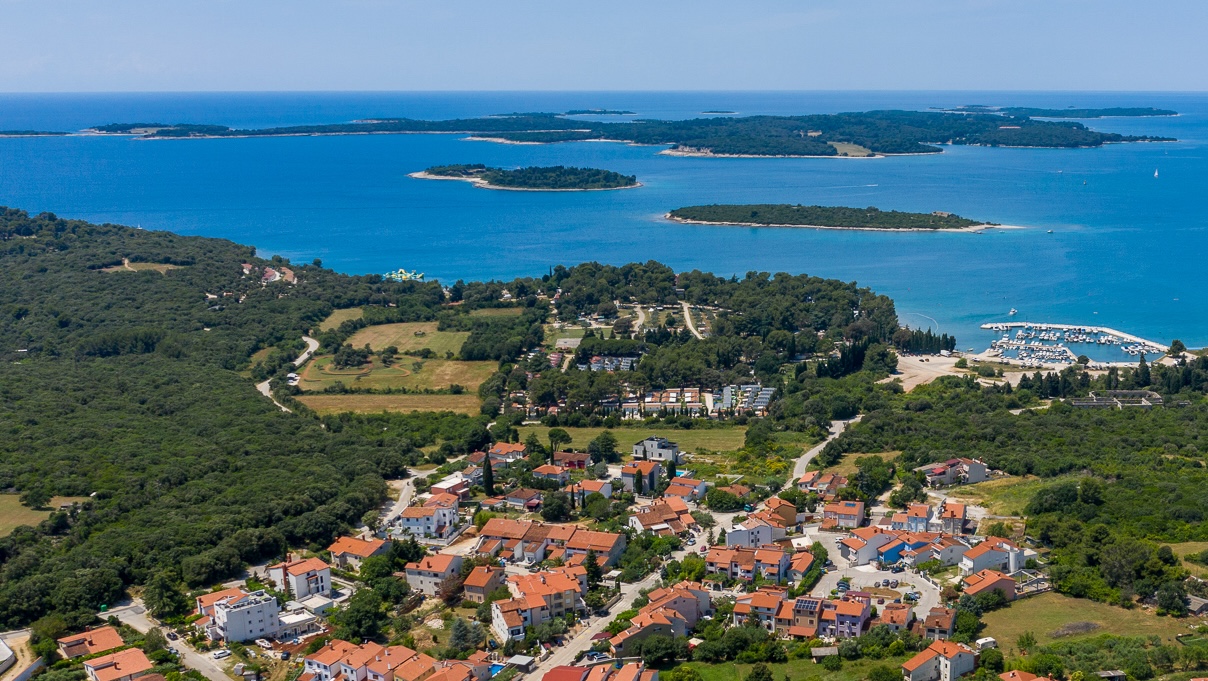
Only a short drive and boat ride from Pula you reach Brijuni National Park, a group of islands that combine rich nature and layered history. For many visitors Brijuni is one of the highlights of their stay and a key part of the wider Pula landmarks.
During the Yugoslav period, Brijuni became internationally famous as a national park and a political and diplomatic center. Numerous world leaders, artists and public figures visited the islands, adding a unique layer of modern history to their ancient Roman and natural heritage.
On Brijuni you find pine forests, clear bays, Roman villas, dinosaur footprints and the remains of early Christian architecture. Easy access to the islands increases the appeal of living in the wider Pula area, especially for buyers who want both urban life and quick escapes into nature.
7. Sea, Lungomare and Coastal Lifestyle
Another reason why Pula is special is how close you are to the sea wherever you are in the city. From the Arena you walk 10 to 15 minutes and already feel the salt in the air.
The Lungomare promenade is one of the favorite places for locals to walk, run or relax by the water. One of the most popular coastal areas is Verudela, well known for its beaches, walking paths and the unique marine Aquarium located inside a historic Austro-Hungarian fort.
Apartments and houses near the coast or with sea views remain among the most desired properties, combining everyday practicality with a Mediterranean lifestyle.
8. Stone Houses and Traditional Istrian Charm Around Pula
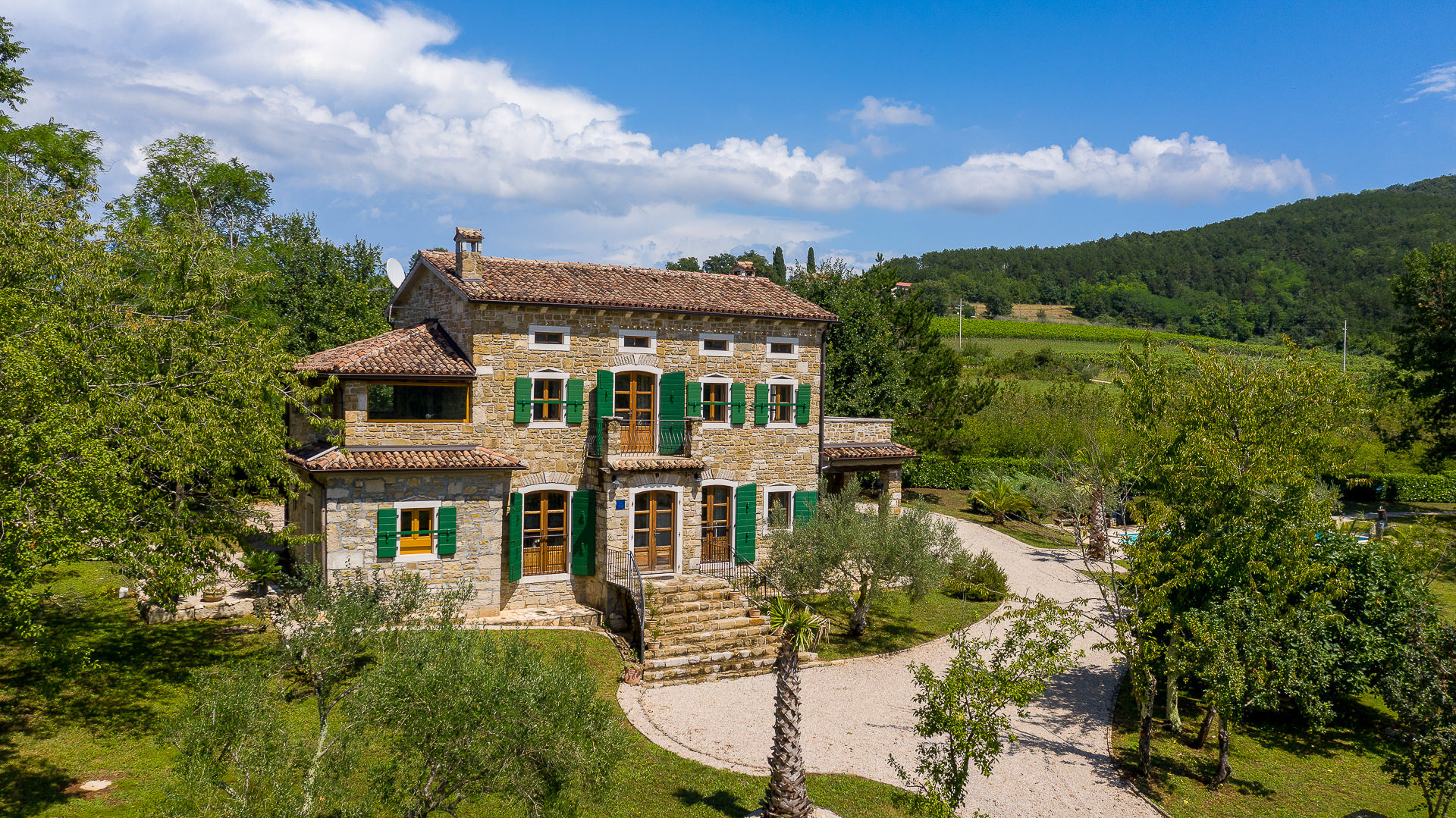
Just a few kilometers from the city center you start seeing traditional Istrian stone houses. Thick stone walls, inner courtyards and authentic details make them ideal for people who want a slower rhythm while staying close to Pula’s services and airport.
Living in a stone house near Pula means village calm during the day and city culture in the evening – concerts, restaurants and events just a short drive away.
9. Pula Through the Seasons: Events and Everyday Life
Pula is not only a summer city. Spring and autumn are ideal for exploring landmarks without crowds, while winter brings a quieter rhythm, Advent programs and cultural events around the historic core.
Tourism numbers show that more visitors discover Pula outside peak season, appreciating its walkability, mild climate and year-round livability.
Conclusion
Conclusion Pula is special because it condenses history, culture and coastal life into a compact, livable city. From Roman arenas and Austro-Hungarian villas to Italian squares, stone houses and the natural beauty of Brijuni, its landmarks are not just monuments – they form the backdrop of everyday life. Whether you plan a short visit or are considering real estate in the area, understanding these layers helps explain why certain streets, hills and neighborhoods feel the way they do. If you want a home connected to both history and the sea, Pula offers a rare mix that few other coastal cities can match.
If you would like professional and authentic guidance through Pula and its landmarks, we highly recommend Sandra Škare (+385 98 9270 333), a licensed tour guide who speaks Croatian and is fluent in German. With the right guide, a city is not just visited – it is truly understood.
