 +385 52 501 333
 info@maris.hr


Croatian Real Estate Market: What Buyers Want, How to Obtain Properties & Where the Market is Headed
The Croatian real estate market is appealing and can present a superb investment, but to the outside world, it looks like a complex puzzle: prices are rising, regulations are specific, and buyer expectations are higher than ever, especially among investors from outside the EU. This whirlwind of information – which differs immensely from non-EU countries – can feel overwhelming, so let us simplify it.
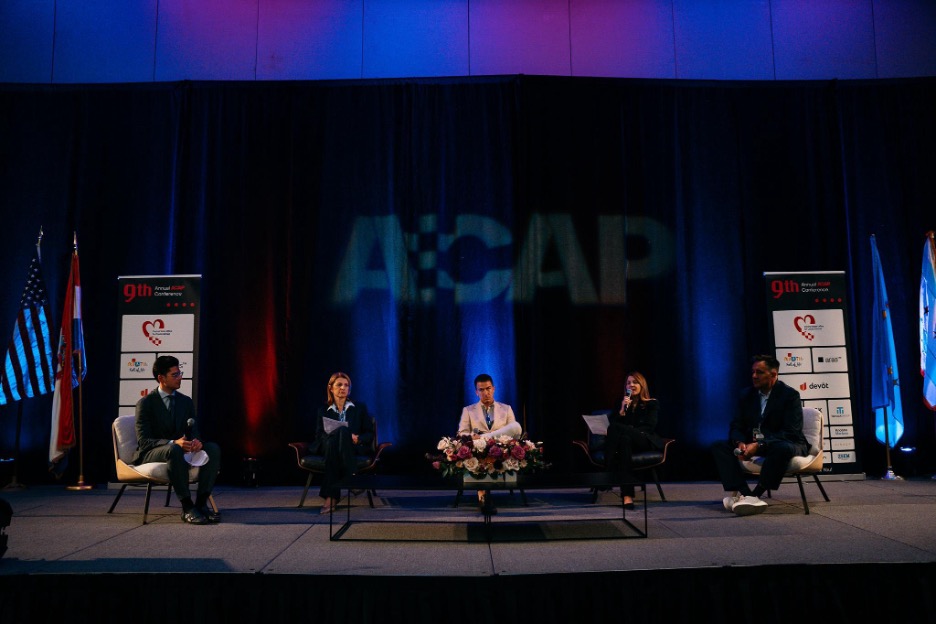
At the recent ACAP panel in Chicago, we talked about what today’s buyers are looking for and where the Croatian real estate market is headed, but we also discussed some concrete topics: legal, tax and mortgage questions, the role of architecture and design, along with the challenges foreign investors usually face.
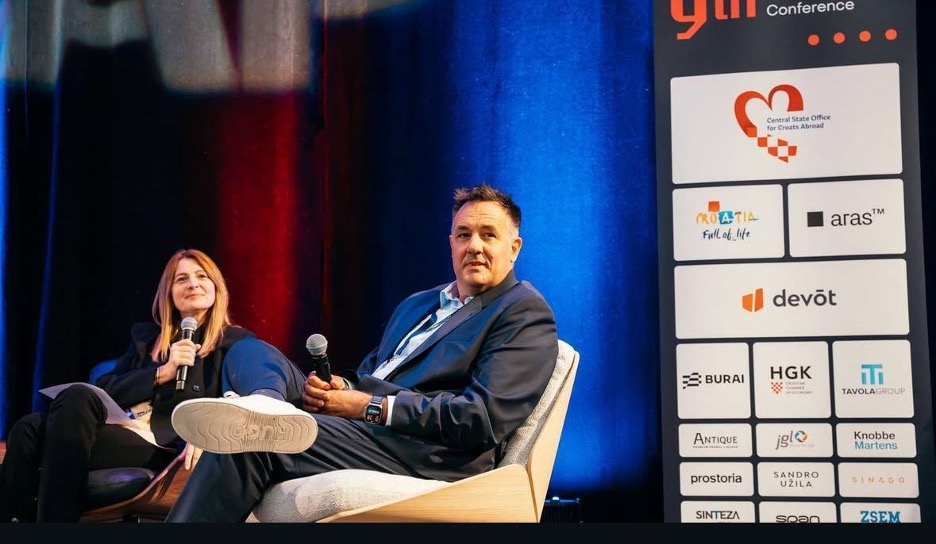
The panel featured Ante Jakić (real estate agent from New York), Sandro Užila (designer from Istria), Sanja Bogović Floričić (tax expert), Mia Mihovilović (attorney), and our Aljoša Vučetić, representing Maris Real Estate Agency from Pula.
To gather all the information presented at the panel together in one place, we have prepared a panel summary in Q&A format, so further on you will find:
- key questions discussed on the panel
- additional questions from the audience
- concrete and relevant answers from our experts.
The goal of this blog is to give you clear and actionable insights in regards to what is really happening on the market, what buyers want, which legal and tax details you need to be ready for, and how to approach investing in real estate in Croatia as a foreigner.
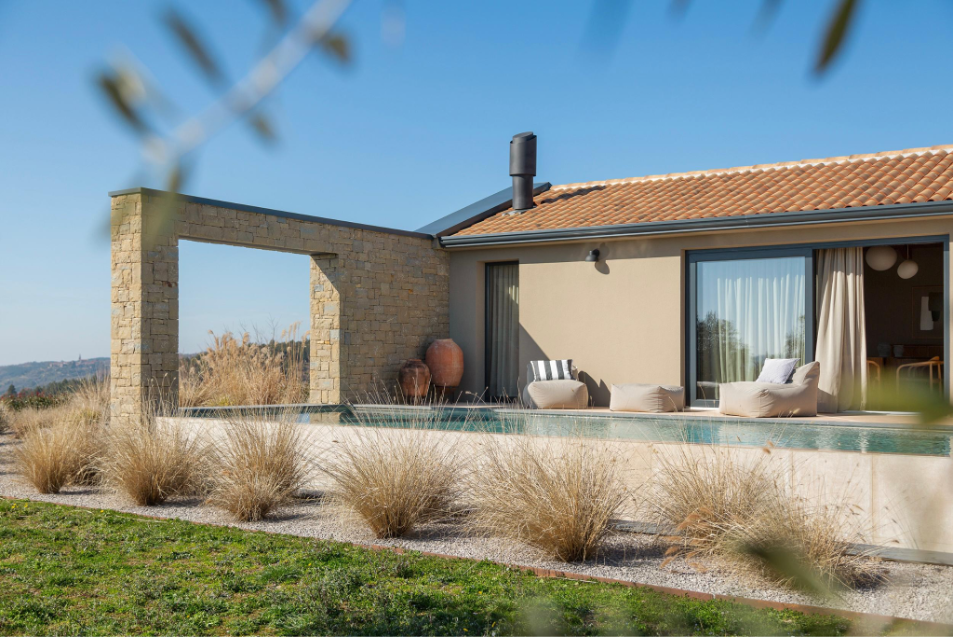
Q: When most of us go to Croatia, we see a lot of modern homes. Can you tell us more about the real estate on the Croatian coast, as well as the Old Stone House project?
A: The "Old Stone House" project's success is rooted in its use of local materials (stone and terracotta), combined with traditional style and modern details. This approach is what the buyers are increasingly seeking because they are looking for authenticity intertwined with modern conveniences. The goal of the project is to emphasize Croatia’s natural beauty and history, and that cannot be done by building standardized modern “gray cubes”, but by creating unique homes inspired by stories and rich history.
Q: When people approach you in regards to real estate in Croatia, do they normally ask about the least expensive option, or do they want something beautiful, culturally inspiring like stone and terracotta? Is their interest rooted in costs or culture?
A: It depends on the client’s goal, namely if they want to flip the property quickly, they might ask for the cheapest option. However, all the panelists agree that the ideal clients are those focused on quality and uniqueness. Most people today are building smaller houses, but spending more on fine details, knowing that a unique, well-designed project with a compelling story sells for significantly more than a cheap, generic build.
Q: What does the Croatian real estate market need in terms of properties? What should people do with properties they have inherited?
A: The market yearns for properties built in the spirit of the local environment and cultural heritage. If a person inherited an old stone house, the decision to restore or rebuild depends entirely on the property’s functionality and financial viability.
As is the case with other successes on the market, not just property-related, design must always accompany functionality and be the financially sound choice. So, if the building is salvageable and if its restoration is possible, it is strongly encouraged to preserve its style and the heritage it possesses.
Q: Looking into the future, if someone is planning to build a home or design a hotel in Croatia, which features should these properties have?
A: When we think of luxury real estate in Croatia, we will instantly think of a pool, a sauna and a gym. However, looking at a property long-term, we realise that the most crucial element of future design is its flexibility of use. Think of the world a year ago, a month ago, even yesterday – you will see that change is the only constant in our lives, so a home must be designed in a manner which will accommodate a changing lifestyle, family size or technology for future purposes.
Always remember that the most important thing is to build a home, not just a house. With this principle in mind, you will align with the global buyer, current market trends and overall property value.
Q: Tell us more about the Croatian real estate market. Are people buying, where do they want to be, and where is the demand coming from?
A: When it comes to real estate properties, we can conclude that the demand is primarily driven by three large groups of potential buyers:
- Croatians who work abroad and are planning to return to Croatia or invest in its properties
- Germans, Austrians, and Slovenians (traditionally a large buyer segment)
- investors from the US, Canada and Australia (who are largely on the increase).
These buyers are primarily focused on apartments and villas, with a trend towards investing in land near major coastal cities like Split, Rovinj and Pula.
Q: What makes people buy properties in Croatia? Is it their ties to the country, safety or tax reasons?
A: We may discuss the reasons and will always come to the same conclusion: the sense of safety in Croatia is the primary motivator when it comes to property purchase. For international buyers, the single biggest draw is that Croatia has a notion of security and tranquil lifestyle, which indeed is the case. Furthermore, if we look at the diaspora, there are also cultural ties that are present, and which are a significant factor related to their decision to return to Croatia and buy a home there.
Q: What is the most expensive real estate on the Croatian coast you have recently encountered, namely in Pula and Istria?
A: For certain high-end apartments in desirable coastal areas such as Rovinj and Pula, the prices had reached as high as 10.000 EUR per square meter (1.072 USD per square feet).
Q: What process awaits non-EU citizens if they wish to buy real estate in Croatia?
Non-EU citizens must secure the Ministry of Justice’s approval to buy property in Croatia—a step which is not required for EU citizens. We can break down the process into a few major segments.
1. Initial steps include selecting a property, signing a pre-contract/purchase agreement, and paying a 10% deposit. It is strongly advised to engage a professional team in order to fully obey the law and select the best possible real estate property at an optimal price. This includes a real estate agent who will help the buyer with the entire property purchase process, a local attorney (odvjetnik) for due diligence and contract management, as well as a tax advisor.
2. The most critical step is to get the approval from the Ministry of Justice. The buyer's attorney will submit a formal request for consent, including the purchase agreement, proof of citizenship and administrative certificates. This process is by all means lengthy, typically taking 6 to 12 months.
3. After having received the approval from the Ministry, just a few final steps await. Upon paying the remaining balance, the attorney will register the ownership change in the Land Registry (Zemljišne knjige), and all that is left for the buyer is to pay the real estate transaction tax (3% of market value or VAT for new construction)
We must also note that future changes related to the EU accession (e.g., Schengen) may simplify the process and potentially eliminate the long approval waiting period for citizens from countries with reciprocal agreements.
Even though we have simplified the process into just three steps here, the reality is that there are a lot of smaller steps, chances and probabilities, paperwork, regulations and other factors unknown to foreigners, so it is of the utmost importance to hire local professionals who can assist the buyers in navigating this complex procedure and mitigating possible risks.
Q: Can a US citizen apply for a mortgage in Croatia? Does the process differ from a regular one?
A: A US citizen can apply for a mortgage from a Croatia-based bank, but must typically provide a much larger deposit – around 50% of the property value, when compared to the 10% required for Croatian citizens.
Documentation related to the property and to the US-based salary is also required.
Q: Approximately how long does it take to sell property in Croatia?
A: While there is no fixed period in regards to real estate sales in Croatia, it is noted that unique properties with a strong story and high-quality construction work are often sought after. They can sell more quickly than standard properties, reaching significantly higher prices. Investment properties are often held for at least two years.
Q: Are there many applicable taxes in Croatia? What does one need to think about when buying, selling, or landing a property?
A: Every rental income is subject to taxation, even if you are not based in Croatia. For US citizens, the complexity lies in managing the US and Croatian tax laws. You must report Croatian income in the US, but receive a tax credit for taxes paid in Croatia, which prevents double taxation. The US tax benefit of depreciation (deductions on the cost of the property) can also be applied. The good news is that a formal double taxation treaty is expected soon, further clarifying these financial arrangements.
Q: If you are used to the American system (LLC) and are planning to build a hotel or villa, how should you structure it in Croatia?
A: It is strongly recommended to structure a business, such as a hotel or villa rental, through a Croatian company (d.o.o.). This provides a clearer structure for operations, sales and taxation, especially when compared to attempting to use an American LLC directly.
Q: If you buy a property in your own name in Croatia, and someone falls and hurts himself on your property, what kind of insurance do you need?
A: While the US system uses an LLC for liability protection, this is not the standard practice in Croatia. You must ensure you have the appropriate liability insurance coverage (known as “Osiguranje od odgovornosti”) to protect against unforeseen accidents on your property. It is extremely important to consult a local insurance broker because the rules and regulations related to insuring real estate in Croatia are quite different than in the US.
Q: Are Croatians going towards establishing trust-controlled trusts?
A: While trusts are a growing topic of discussion, the Croatian legal system currently does not fully recognize the US-style trust law. When it comes to property ownership, it must be held by an individual or a company, and it cannot be owned by a US trust.
Q: When it comes to the Croatian real estate market, would a buyer need to hire professionals on every step of the purchase process?
A: Yes. As we have already mentioned, in order to ensure success and navigate the complexities of Croatian law, it is highly recommended to hire professionals on each step of the process. This includes a real estate agent, a local lawyer and a tax professional – but it is important to choose wisely and select trusted professionals who are experienced in these kinds of processes. Every purchase process is different and will come with its own peculiarities, along with standard practices.
Final Thoughts – and See You in Seattle?
Croatian real estate market is not just another market on the map – it’s a place where safety, lifestyle, heritage and smart investing all meet together in a beautiful setting. If there is one key takeaway from this panel, it’s this: do not just buy a house in Croatia – build a home accompanied by a long-term strategy that fits your life, your family, and your goals.
For foreign buyers, especially those from the US, Canada or Australia, success in Croatia usually comes down to three things:
- working with a trusted local team (agent, lawyer, tax professional, architect/designer)
- respecting the local environment and culture in every project
- understanding the legal, tax, and financing realities before you sign anything
If you’re thinking about investing in real estate in Croatia, feel free to reach out to our Aljoša and the rest of our team at Maris Real Estate in Pula – we will be happy to help you navigate the process and find the perfect real estate opportunity for you.
And lastly, this conversation doesn’t end here.
We are looking forward to continuing it at the 10th ACAP Conference in Seattle, taking place from October 2–4, 2026. Aljoša will be there and he will be happy to meet you in person – you can talk more about the Croatian real estate market, where it is headed and how you can become a part of it.
